
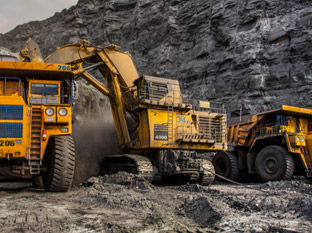
The Chile copper mine core drilling project focused on deep geological exploration, where sample integrity and drilling continuity directly affect geological interpretation. A diamond core drilling tool package was used to improve core recovery through changing rock conditions while reducing interruptions in the exploration cycle.
Project Overview
| Project | Chile Copper Mine Exploration Project |
|---|---|
| Application | Deep mineral exploration |
| Tool system | Diamond core bits and compatible core drilling tools |
| Main objective | Preserve representative core and maintain drilling continuity |
| Recorded result | Core recovery remained above 96%; project cycle shortened by 20% |
Why Core Recovery Was the Main KPI
In mineral exploration, drilling speed alone does not define success. The recovered core must remain representative enough for logging, structural interpretation and laboratory analysis. Broken core, washing, vibration or unsuitable bit selection can reduce the amount and quality of material returned to the surface.
Deep drilling adds further variables: formation changes, rod-string stability, fluid circulation, bit wear and the time required to retrieve samples. The selection process therefore considered core quality and total cycle time together.
Diamond Core Drilling Selection Logic
- Match bit matrix and diamond exposure to formation hardness and abrasiveness.
- Select the core-bit profile with attention to cutting stability and fluid flow.
- Check core barrel, reaming shell, drill rods and thread compatibility as a complete system.
- Adjust rotation, feed pressure and flushing to formation changes instead of using one fixed setting.
- Inspect bit wear and recovered core condition at planned intervals.
A matrix that is too hard may expose diamonds too slowly and reduce cutting efficiency, while a matrix that is too soft may wear prematurely. Fluid circulation must remove cuttings and cool the bit without washing or damaging the sample. These variables need to be reviewed together with the actual core condition.
Recorded Project Results
The supplied project record shows that core recovery remained stable at more than 96%. The overall project cycle was shortened by 20%. Stable sample recovery reduced repeated work and allowed the exploration team to obtain usable geological information more efficiently.
These outcomes relate to the recorded conditions of this project. Core recovery and drilling speed can change with structure, fracture frequency, water conditions, bit selection, operator practice and equipment capability.
How to Monitor Core Drilling Performance
- Core recovery percentage by run
- Core condition and degree of breakage
- Penetration rate and bit life
- Fluid pressure, return and loss
- Frequency of blocked tubes or interrupted runs
- Total time per completed meter, including retrieval and tool changes
Information Needed Before Tool Selection
For a comparable recommendation, provide the target depth, expected geology, core diameter, current drilling system, drill rod standard, rig capability, flushing medium and representative wear or core photographs. The tool package should be selected around the required geological outcome rather than bit diameter alone.
Compare RC drilling and conventional DTH drilling, explore our geological exploration solutions, or review the HLDRILLS product center.
Written by: HLDRILLS Technical Team
Technical review: HLDRILLS Drilling Applications Team
Data note: Results are based on the project information and operating record supplied for this case.